
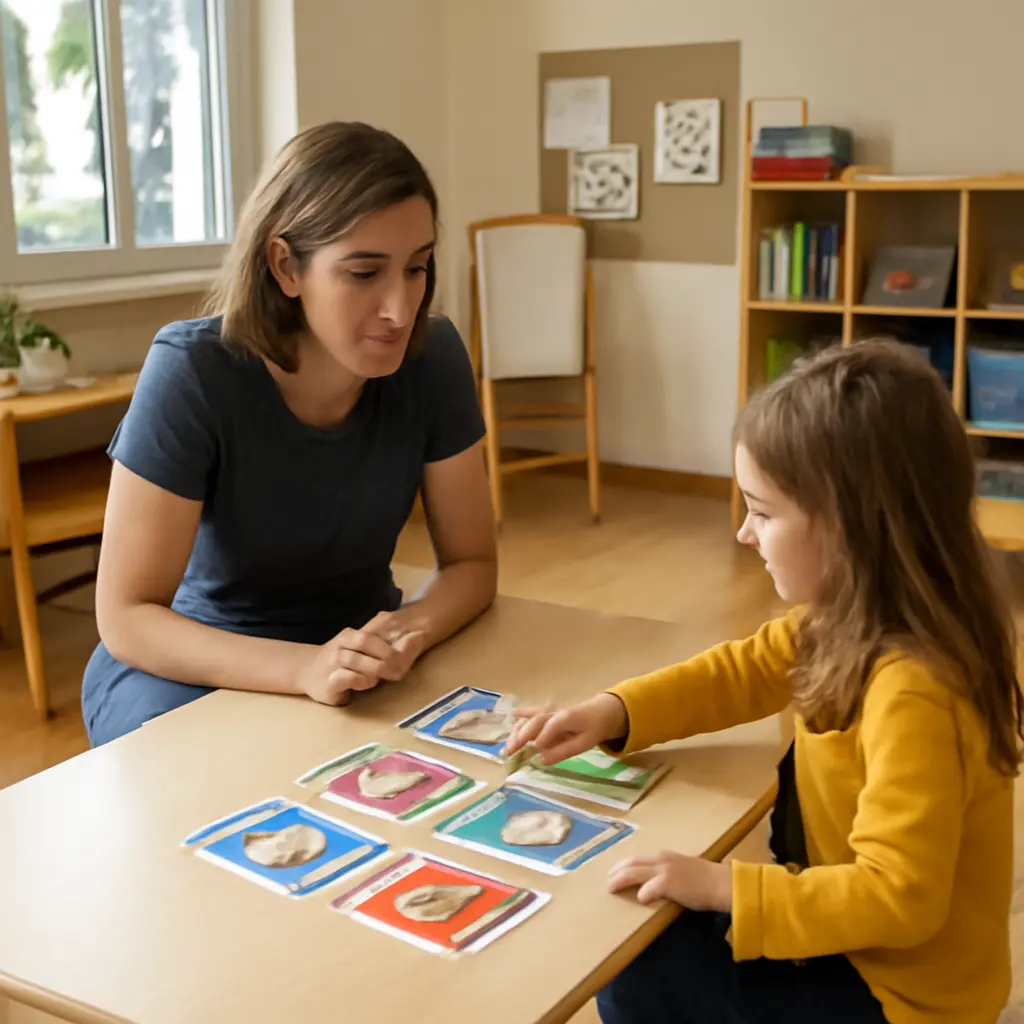
Emotional intelligence in childhood—the developing ability to recognize, understand, express, and regulate emotions while responding to other people’s feelings—is shaped through relationships and experience, not acquired automatically with age. Caregivers, teachers, and peers help children practice these skills through everyday interactions, supportive guidance, and opportunities to recover from difficult moments. The stakes are substantial: the World Health Organization estimates that one in seven 10–19-year-olds experiences a mental disorder, while research on social and emotional learning finds that well-designed school programs can improve both social-emotional skills and academic outcomes. This article explains what emotional intelligence entails, how relationships and explicit teaching nurture it, what the evidence says about outcomes, and how adults can support development without expecting children to manage emotions perfectly.
Emotional Intelligence Depends on Relationships and Learning
Emotional intelligence is a broad term for skills involved in noticing emotions, making sense of them, regulating responses, and using emotional information in social situations. Psychologists Peter Salovey and John D. Mayer described emotional intelligence as abilities involving the perception, use, understanding, and management of emotion. In childhood, these abilities develop gradually; they are not a fixed personality trait or a simple measure of whether a child behaves well.
The phrase “doesn’t happen by accident” does not mean that every skill must be taught in a formal lesson. Children learn through repeated experiences: being comforted, hearing adults name feelings, negotiating disagreements, and seeing how others respond under stress. Their development also reflects temperament, neurodevelopment, culture, relationships, and circumstances. A child may be able to explain a feeling but still struggle to control an impulse, especially when tired, frightened, or overwhelmed.
Emotional awareness and emotional vocabulary
Emotional awareness means noticing and identifying one’s own feelings and recognizing emotional cues in others. Adults can support it by naming feelings without judgment—“You look disappointed that the game ended”—and helping children distinguish similar states, such as frustration, worry, and sadness. This gives children language for communicating needs before distress escalates. Naming an emotion does not require adults to agree with every interpretation or permit harmful behavior.
Understanding and expressing emotions
Emotional understanding involves learning that feelings have causes, may change, and can differ between people facing the same event. Children also learn that emotions can be expressed in many ways and that context matters. Adults strengthen this understanding by asking open questions, listening to the answer, and explaining social boundaries—for example, “It’s okay to feel angry; it’s not okay to hit.” The distinction validates the feeling while guiding the behavior.
Emotion regulation and recovery
Emotion regulation is the ability to manage emotional intensity and choose a response that fits the situation. It is not the same as suppressing feelings or staying calm at all times. Young children often rely on adults to help them settle; over time, they can learn strategies such as pausing, breathing slowly, seeking support, or returning to a problem after a break. These capacities develop unevenly, so expectations should reflect a child’s age, abilities, and stress level.
Awareness, understanding, and regulation become more useful when children apply them with other people. That makes relationships—not just individual lessons—a central setting for emotional learning.
Caregiver Relationships Build Emotional Intelligence
Caregiver relationships provide children with repeated experiences of emotional support, limits, and repair. Developmental psychologist John Gottman and colleagues used the term “emotion coaching” for an approach in which adults notice children’s feelings, treat emotional moments as opportunities for connection and teaching, listen empathetically, help name feelings, and set limits on behavior while working through solutions. The approach is not about preventing distress; it is about helping children experience distress with support and learn from it.
Responsive caregiving and co-regulation
Co-regulation is the process by which a trusted adult helps a child manage stress through a calm presence, predictable routines, and responsive interaction. A young child may not yet have the capacity to use a coping strategy independently; an adult can first help create the conditions for the child to settle. The Harvard Center on the Developing Child describes responsive “serve and return” interactions—when a child signals and an adult responds—as important experiences for early development. Consistency matters, but no caregiver responds perfectly every time; reconnecting after a difficult interaction is also part of learning.
Modeling emotional skills
Children observe how adults handle disappointment, conflict, and mistakes. A caregiver who says, “I’m getting frustrated, so I’m going to take a minute and then we’ll talk,” demonstrates emotional labeling and a constructive pause. Modeling also includes apologizing after an overreaction and making amends. These examples show that regulation is a practice, not a demand to feel nothing.
Boundaries, repair, and emotional safety
Emotional safety combines warmth with clear, developmentally appropriate boundaries. Adults can acknowledge a child’s anger while stopping aggression, then help the child consider what happened and how to repair harm. This approach differs from shaming, which labels the child as bad, and from permissiveness, which leaves harmful conduct unaddressed. Predictable boundaries help children understand that feelings are acceptable while actions still have consequences.
Families are not the only places children practice these skills. Classrooms and peer groups provide fresh opportunities to communicate, cooperate, handle conflict, and learn from people with different perspectives.
Schools and Peer Experiences Strengthen Emotional Intelligence
Schools can build emotional intelligence by making social and emotional learning (SEL) part of instruction, classroom routines, and relationships. The Collaborative for Academic, Social, and Emotional Learning (CASEL) groups core SEL competencies into five areas: self-awareness, self-management, social awareness, relationship skills, and responsible decision-making. These categories overlap with emotional intelligence, although the terms are not identical and different programs may define or assess them differently.
Explicit social and emotional learning
Explicit SEL gives students structured opportunities to learn and practice skills such as identifying emotions, setting goals, listening, and resolving disagreements. A 2011 meta-analysis by Joseph Durlak and colleagues examined 213 universal school-based SEL programs involving 270,034 students from kindergarten through high school. Compared with control groups, participating students showed improved social and emotional skills, attitudes, and behavior, alongside an 11-percentile-point gain in academic achievement. The finding supports well-implemented programs; it does not mean every curriculum will produce the same result in every school.
Peer interaction and conflict resolution
Friendships and group activities let children practice taking turns, recognizing another person’s perspective, negotiating rules, and recovering after conflict. Adults can guide these interactions without resolving every disagreement for children. Questions such as “What did each of you want?” and “What could make this fair?” prompt perspective-taking and problem-solving. When a conflict involves bullying, intimidation, or a safety risk, however, adults should intervene rather than treat it as an ordinary negotiation.
A whole-school climate
SEL is more credible when adults use the same principles across the school: respectful communication, clear expectations, and fair responses to behavior. A lesson about empathy has limited value if students regularly experience humiliation or exclusion. Schools can reinforce emotional learning through teacher modeling, supportive classroom management, family partnerships, and access to qualified help when students need more than universal instruction.
Evidence that emotional skills can be taught raises a practical question: what difference might they make beyond the classroom? Research points to links with well-being and learning, while also showing why emotional intelligence should not be treated as a substitute for mental-health care.
Emotional Intelligence Supports Well-Being and Learning
Emotional skills can help children communicate needs, manage setbacks, cooperate with peers, and stay engaged in learning. They may also help adults notice distress earlier. But emotional intelligence does not guarantee academic success or prevent mental-health difficulties; outcomes depend on many factors, including health, family resources, relationships, school conditions, and access to support.
Mental health and early support
The World Health Organization estimates that one in seven people aged 10–19 experiences a mental disorder. This figure describes a major public-health concern, not a failure of emotional learning or caregiving. Emotional vocabulary and trusted relationships may make it easier for some young people to ask for help, but they cannot replace assessment or treatment. Persistent distress, major changes in sleep or behavior, withdrawal, or talk of self-harm warrant attention from an appropriately qualified professional; immediate danger requires urgent local emergency support.
Academic and social outcomes
Self-management can help students return to a task after frustration, while relationship skills support group work and classroom participation. The Durlak meta-analysis provides evidence that SEL programs can improve measured academic performance as well as social-emotional outcomes. These results should be interpreted carefully: academic gains are an average across programs and studies, not a promise that a single activity will raise every child’s grades.
Equity, culture, and inclusion
Emotional expression is shaped by culture, disability, neurodiversity, language, and individual temperament. A quiet child is not necessarily emotionally skilled, and a child who expresses feelings differently is not necessarily deficient. Adults should avoid treating eye contact, compliance, or a particular communication style as universal proof of emotional competence. Inclusive support asks what a child is communicating, adapts strategies to their needs, and distinguishes cultural difference from harm or distress.
These outcomes depend less on a single “magic” technique than on repeated, respectful practice across settings. Families and educators can use a few consistent habits to make that practice part of ordinary life.
Practical Ways Adults Can Nurture Emotional Intelligence
Adults can support emotional development through small, repeatable interactions rather than expecting children to master feelings on command. The goal is not to eliminate conflict or distress; it is to build understanding, safety, and increasingly independent coping over time.
Use everyday moments to name feelings
Describe observable cues gently and leave room for correction: “You’ve been quiet since the visit. Are you feeling tired, disappointed, or something else?” This helps build emotional vocabulary without claiming to know exactly what a child feels. Stories, play, and conversations about characters’ choices can also help children explore emotions at a comfortable distance.
Connect before correcting
When a child is highly upset, begin with a calm presence and a brief acknowledgment rather than a lecture. Once the child is more settled, explain the boundary and discuss next steps. For example: “You’re angry that it’s time to leave. I won’t let you kick. Let’s sit together, then decide how to say goodbye.” A child who is unsafe or harming someone needs immediate, clear intervention.
Practice coping strategies when calm
Children are more likely to use a strategy they have practiced before a crisis. Families and classrooms can rehearse taking a pause, asking for help, using a quiet space, or breaking a task into smaller steps. Strategies should be flexible: breathing exercises help some children, while movement, sensory supports, visual schedules, or a trusted adult may work better for others.
Reflect and repair after conflict
After everyone is calm, help the child reflect without turning the conversation into an interrogation. Ask what happened, what each person might have felt, and what could help next time. If someone was hurt, focus on meaningful repair—such as replacing a damaged item or checking on the person—rather than a forced apology alone. Adults can participate in repair when their own actions contributed to the conflict.
- Notice and name emotions without shaming them.
- Set clear limits on unsafe or hurtful behavior.
- Model coping, perspective-taking, and sincere repair.
- Coordinate with teachers and caregivers so expectations are understandable and consistent.
- Seek professional guidance when distress is persistent, intense, or interfering with daily life.
Conclusion: Emotional Intelligence Is Built Through Practice
Emotional intelligence in childhood develops through a combination of growth, relationships, and learning. Emotional awareness, understanding, and regulation take shape through caregiver responsiveness, clear boundaries, peer interaction, and well-designed school practices. Research on SEL programs—including a large meta-analysis reporting improved social-emotional outcomes and an average 11-percentile-point academic achievement gain—shows that these skills can be supported deliberately. At the same time, emotional intelligence is not a cure for mental-health challenges, a measure of a child’s worth, or a reason to demand constant calm.
Parents, caregivers, and educators can start by naming feelings, listening before correcting, practicing coping strategies, and repairing relationships after conflict. Make room for differences in temperament and culture, and reach out for professional support when a child’s distress persists or disrupts daily life. Emotional learning is an ongoing process: consistent, caring experiences give children more chances to understand themselves and respond thoughtfully to others.
Sources: Salovey, Peter, and John D. Mayer, “Emotional Intelligence,” Imagination, Cognition and Personality, 1990, https://doi.org/10.2190/DUGG-P24E-52WK-6CDG; Gottman, John M., Lynn F. Katz, and Carole Hooven, Meta-Emotion: How Families Communicate Emotionally, 1996, https://www.routledge.com/Meta-Emotion-How-Families-Communicate-Emotionally/Gottman-Katz-Hooven/p/book/9780805819243; Harvard University Center on the Developing Child, “Serve and Return,” https://developingchild.harvard.edu/science/key-concepts/serve-and-return/; Collaborative for Academic, Social, and Emotional Learning (CASEL), “What Is the CASEL Framework?”, https://casel.org/fundamentals-of-sel/what-is-the-casel-framework/; Durlak, Joseph A., et al., “The Impact of Enhancing Students’ Social and Emotional Learning: A Meta-Analysis of School-Based Universal Interventions,” Child Development, 2011, https://doi.org/10.1111/j.1467-8624.2010.01564.x; World Health Organization, “Adolescent Mental Health,” https://www.who.int/news-room/fact-sheets/detail/adolescent-mental-health.