
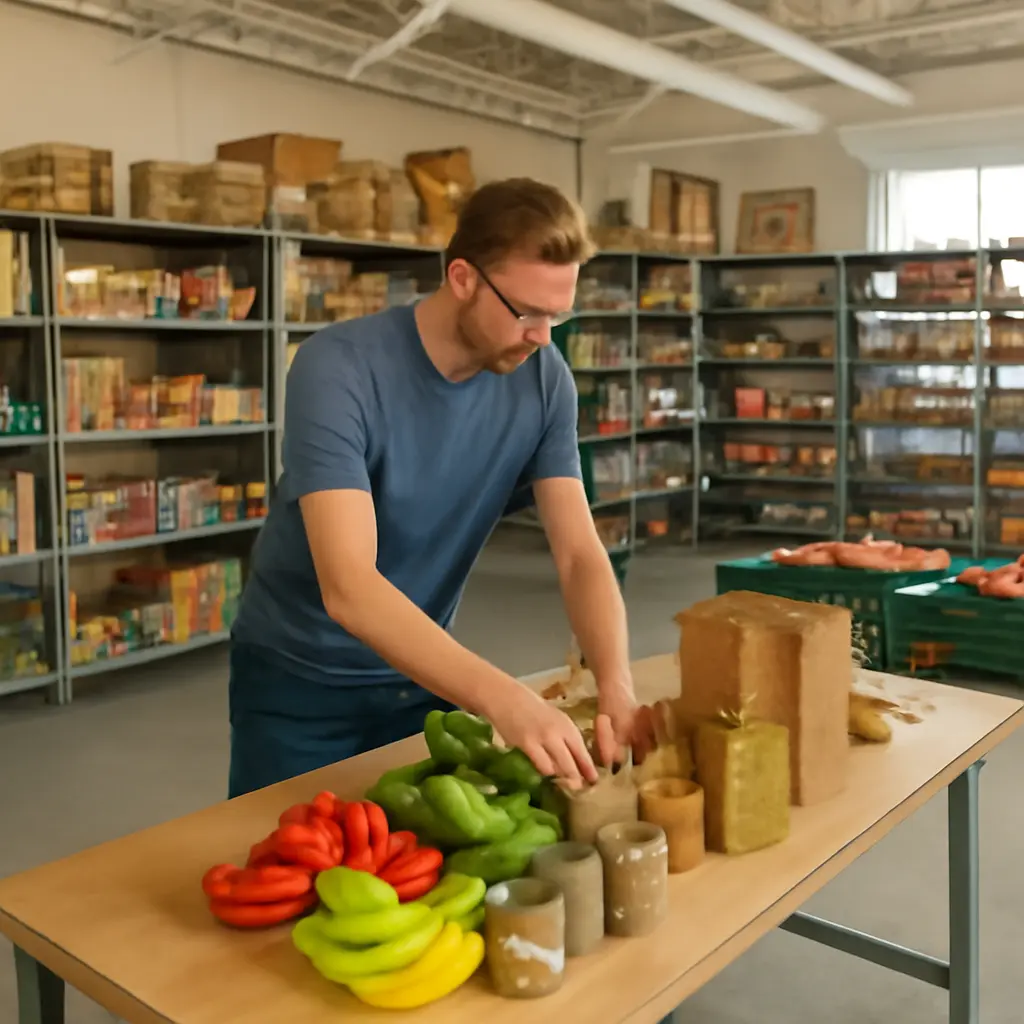
Food banks are nonprofit organizations that collect, store, and distribute food to people facing hunger, often through a network of local pantries and community partners. They are serving more families because food insecurity is being driven by a combination of high living costs, inadequate or unstable incomes, and disruptions to public food assistance—not simply because food has become harder to donate. Feeding America reported that its network distributed 6.6 billion meals in 2023, while its Map the Meal Gap research estimated that 47.4 million people in the United States experienced food insecurity that year. Understanding the rise means looking at household budgets, the limits of charitable food, changes in government support, and what food banks can—and cannot—do to address the underlying problem.
Why food bank demand is rising: household costs outpace financial breathing room
Food bank demand refers to the number of people seeking or receiving food assistance from food banks and the local agencies they supply. Feeding America describes food banks as organizations that source and distribute food through partner agencies; individual pantries, meal programs, and mobile distributions are among the ways that food reaches households. Demand can rise when more people need help, when existing clients need food more often, or when pantry visits become more frequent because household resources no longer cover basic expenses.
The increase is not explained by one national price statistic. It reflects the pressure of food costs alongside rent, utilities, transportation, health care, and childcare. A family may have a job and still be unable to afford groceries after paying fixed bills. The U.S. Department of Agriculture’s 2023 food-security report found that 13.5% of U.S. households—about 18.0 million—were food insecure at some point during the year, up from 12.8% in 2022. That measure captures constrained access to adequate food, not simply hunger on the day a survey is taken.
Food inflation and the cost squeeze
Food inflation is the increase in prices over time; its effects are especially difficult for households already spending most of their income on necessities. The Bureau of Labor Statistics reported that food-at-home prices rose 1.3% in 2024, following a much larger cumulative increase in the preceding years. Even when the rate of increase slows, prices generally do not return to earlier levels. A household’s grocery budget can therefore remain strained after headline inflation eases.
This helps explain why food bank use may stay high after a price spike. Families often respond first by switching to cheaper foods, reducing portions, or postponing other bills. When those adjustments are exhausted, charitable food becomes a way to stretch remaining income. Food banks can provide immediate relief, but they cannot make rent, medicine, or groceries affordable for the household as a whole.
Housing and other essential bills compete with groceries
Housing cost burden occurs when a household spends a large share of its income on housing, leaving less for food and other needs. The U.S. Department of Housing and Urban Development commonly defines households spending more than 30% of income on housing as cost-burdened. When rent, energy bills, car payments, or medical expenses rise, food is one of the few budget items that can be cut quickly—often with serious consequences.
The link is practical: a pantry visit may help a family avoid choosing between groceries and a utility bill, but recurring visits can signal that the household budget is structurally out of balance. This is why food-bank demand is closely connected to housing affordability and income stability, not just the price of food.
How income and benefit changes shape food bank use
Food insecurity is an economic condition in which households have limited or uncertain access to enough food for an active, healthy life. USDA measures it through questions about disrupted eating patterns and reduced food intake caused by insufficient resources. Food-bank visits are one visible response, but many food-insecure households do not use charitable food, and not every pantry client is represented in national survey estimates.
Income shocks, unstable work schedules, and changes in public benefits can move households from coping to needing help. The bridge between those pressures and food-bank demand is often a timing gap: money or assistance runs out before the next paycheck, benefit payment, or bill cycle.
Low wages, irregular hours, and financial shocks
Income instability means that earnings fluctuate or are insufficient to reliably cover basic expenses. Workers in hourly, seasonal, contract, and service jobs may face variable shifts, unpredictable tips, or short periods without work. A missed shift, car repair, illness, or childcare disruption can quickly affect a household’s ability to buy food, even when someone is employed.
USDA’s 2023 data show that food insecurity is more common in households with lower incomes and in households experiencing unemployment or other economic hardships. The figures do not mean every low-wage worker needs a food bank; they show how limited financial reserves make ordinary disruptions more consequential. A pantry can bridge a short-term gap, while longer-term stability depends on reliable earnings and affordable essentials.
SNAP changes and the end of emergency allotments
The Supplemental Nutrition Assistance Program (SNAP) is the largest U.S. federal nutrition assistance program, providing eligible households with benefits to purchase food. During the COVID-19 emergency, states issued temporary emergency allotments that increased many recipients’ monthly benefits. Those allotments ended nationwide in February 2023, reducing grocery support for participating households.
The Congressional Budget Office and USDA describe SNAP as a central part of the safety net, but benefit levels and eligibility rules differ from household to household. When temporary support ends, some families turn to food pantries to fill the resulting gap. This does not establish that SNAP changes alone caused the national rise in food-bank visits; it shows how the withdrawal of extra assistance can add pressure when food and housing costs remain high.
Who is affected: children, older adults, and working families
Food insecurity affects people across age groups, but its effects and routes to assistance differ. Children may rely on school meals during the week, while older adults can face fixed incomes, medical costs, or mobility barriers. Working families may have earnings above the threshold for some programs but still struggle with local living costs. USDA’s 2023 report found that households with children were more likely to be food insecure than households without children.
Food banks and their partners respond through approaches such as school pantries, senior grocery programs, culturally appropriate food distribution, and mobile services. These are different forms of charitable food assistance, designed to reduce practical barriers such as transportation, limited opening hours, or difficulty carrying groceries.
What food banks can do—and why charity alone cannot solve hunger
A food bank is a logistics and distribution organization as well as a source of emergency food. Feeding America’s network works with food manufacturers, retailers, farms, government agencies, and local nonprofits to recover or purchase food and deliver it to communities. The approach can move large quantities of food, but the amount available depends on donations, purchasing resources, transportation, storage, and local demand.
Feeding America reported distributing 6.6 billion meals through its network in 2023. That scale illustrates both the reach of the charitable system and the level of need it is being asked to address. A meal distributed is meaningful immediate support; it is not proof that a household’s underlying food insecurity has ended.
Pantries, meal programs, and mobile distribution
Food pantries usually provide groceries for people to prepare at home, while meal programs serve prepared food. Mobile distributions bring food to locations where access may otherwise be limited. Many food banks supply these services indirectly through local partner agencies, which understand neighborhood needs and provide direct contact with clients.
These models address different barriers. A pantry may help a family plan meals, a community meal may support someone without cooking facilities, and a mobile site may reduce transport burdens. Service counts can also be affected by operating hours, referral requirements, and how agencies record visits, so figures from different organizations are not always directly comparable.
Food rescue, donations, and the limits of supply
Food rescue is the recovery of wholesome surplus food from farms, manufacturers, wholesalers, and retailers for redistribution rather than disposal. It can increase the food available to charities and reduce waste. However, rescued food is not a guaranteed or perfectly predictable supply: donations vary by season and location, and food banks must have the staff, refrigeration, vehicles, and storage to handle it safely.
A donation drive can help, particularly when it provides nutritious, shelf-stable items requested by local agencies. Yet food banks also need cash contributions, which can be used to buy specific products, cover transportation, and respond to gaps that donations do not meet. The best support is often guided by the food bank’s current list of needs rather than assumptions about what clients require.
The role of public policy and longer-term solutions
Public policy can affect food security through SNAP, school meals, housing assistance, wages, tax credits, and access to health care. These programs operate at a different scale from charitable food distribution: they can change household resources or costs before a family reaches a pantry. Food banks often help people connect with benefits and community services, but eligibility rules and administrative barriers can still prevent assistance from reaching everyone who needs it.
Feeding America’s Map the Meal Gap estimates local food insecurity and the resources needed to address it, making clear that need varies substantially by community. A rural area with long travel distances, for example, may need mobile distribution and transport support; a high-cost urban neighborhood may face intense pressure from rent. Effective responses therefore combine emergency food with policies and services that improve income security and reduce the cost burden on households.
How communities can respond to rising food bank demand
The rising use of food banks is a warning about the gap between household resources and the cost of meeting basic needs. Food banks provide a vital immediate response, but a durable reduction in demand requires addressing the conditions that send families to seek help. Communities can support both ends of the response: strengthen food distribution now and reduce avoidable financial hardship over time.
- Ask local food banks which foods, funding, volunteer skills, or delivery support they need most.
- Support benefit-access programs that help eligible households apply for SNAP, school meals, and other assistance.
- Back community efforts that improve access to affordable housing, stable work, childcare, and transportation.
- Use local and national food-security data to identify which neighborhoods and groups are being missed.
A useful visual for an article or presentation would be a line chart comparing USDA household food-insecurity rates from 2022 and 2023 alongside Feeding America’s network meal-distribution totals. The measures describe different things—surveyed household conditions versus food distributed—so they should be labeled clearly rather than treated as interchangeable indicators.
Conclusion: food bank growth reflects a wider affordability problem
Food banks are reaching more families because many households have too little financial room between income and essential expenses. Persistently elevated food prices, housing and utility costs, unstable earnings, and the end of temporary nutrition benefits have all contributed to pressure on household budgets. USDA estimated that 18.0 million U.S. households experienced food insecurity in 2023, while Feeding America’s network distributed 6.6 billion meals that year.
Pantries, meal programs, food rescue, and mobile distribution can prevent immediate hardship, but charitable food is not a substitute for adequate income, affordable housing, or effective public assistance. Readers can help by supporting local food banks in the ways they request and by learning how food and income policies affect hunger in their communities. For deeper context, consult USDA’s annual Household Food Security report and Feeding America’s Map the Meal Gap research.
Sources: U.S. Department of Agriculture, Economic Research Service, Household Food Security in the United States in 2023, https://www.ers.usda.gov/publications/pub-details/?pubid=109895; Feeding America, Map the Meal Gap 2024, https://www.feedingamerica.org/research/map-the-meal-gap; Feeding America, 2023 Annual Report, https://www.feedingamerica.org/about-us/press-room/annual-report; U.S. Bureau of Labor Statistics, Consumer Price Index—December 2024, https://www.bls.gov/news.release/archives/cpi_01152025.htm; U.S. Department of Housing and Urban Development, Affordable Housing, https://www.hud.gov/program_offices/comm_planning/affordablehousing/; U.S. Department of Agriculture, Food and Nutrition Service, Supplemental Nutrition Assistance Program, https://www.fns.usda.gov/snap/supplemental-nutrition-assistance-program; Congressional Budget Office, Effects of Changes to the Supplemental Nutrition Assistance Program, https://www.cbo.gov/topics/health-care/social-security-and-medicare/supplemental-nutrition-assistance-program