
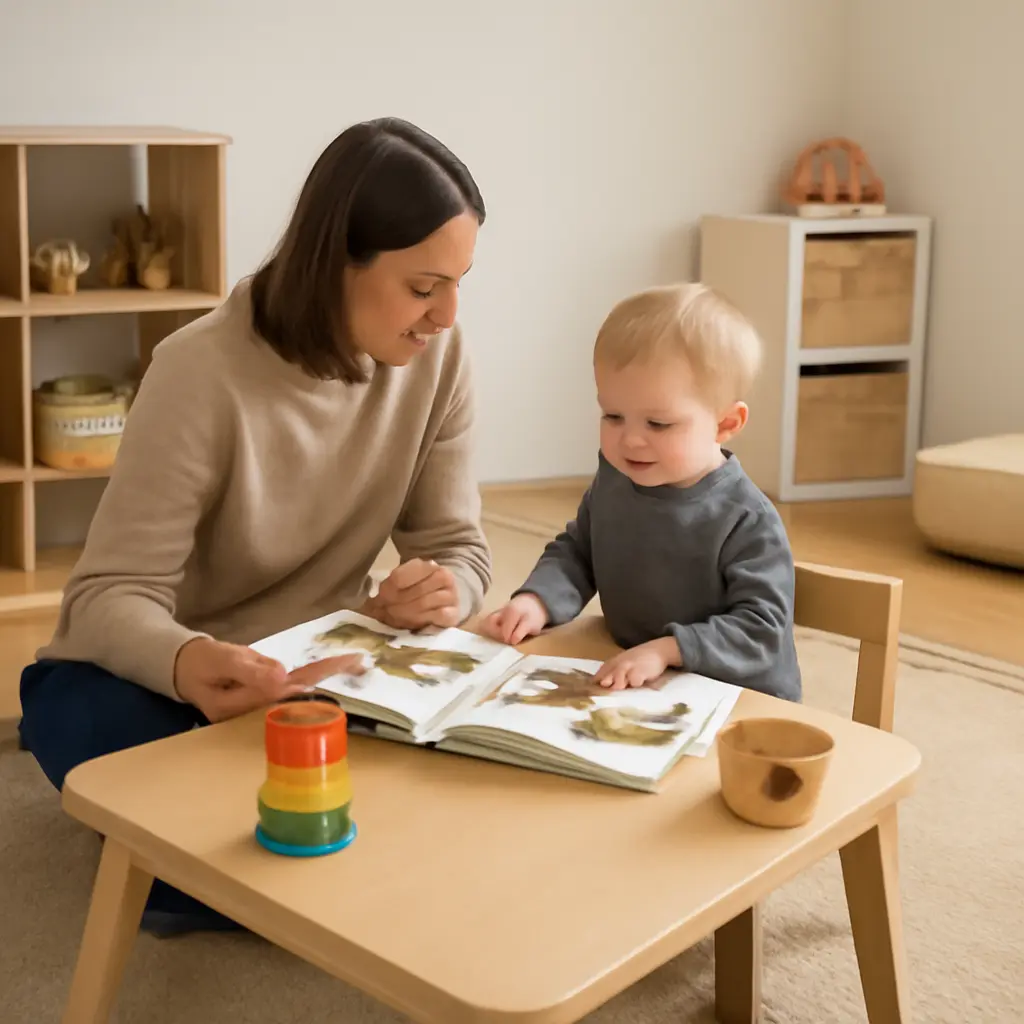
Child development milestones are skills that many children reach around particular ages as they move, communicate, think, play, and relate to others. They are guideposts—not deadlines or a diagnosis. The milestones that matter most are patterns across these areas, especially whether a child is gaining skills over time, responding to people and sounds, communicating needs, and using movement to explore. The Centers for Disease Control and Prevention (CDC) milestone checklists describe skills that at least 75% of children can do by a given age, while the American Academy of Pediatrics (AAP) recommends developmental surveillance at every health visit and standardized screening at specific ages. Knowing what to look for can help families celebrate progress, raise concerns early, and seek support without waiting for a child to “catch up” on their own.
Developmental milestones and age ranges: what the guideposts mean
A developmental milestone is an observable skill or behavior associated with a stage of development. The CDC defines its milestone checklists around what most children—at least 75%—are expected to do by a particular age. That threshold is a practical monitoring guide, not a test of intelligence and not a guarantee that a child has a developmental condition if a skill is absent.
Development is commonly grouped into four connected domains: social and emotional skills, language and communication, cognitive skills, and movement or physical development. Progress can vary within and across domains. A child may be advanced in one area and still developing a skill in another; the overall pattern and any loss of abilities are more informative than a single comparison.
Why age ranges are not pass-or-fail deadlines
Milestone ages are approximate reference points. Children develop at different rates, and a checklist cannot account for every influence, including health, opportunity to practice, language environment, disability, or birth history. For children born more than three weeks early, clinicians commonly use corrected age when considering early milestones until about age 2. If a child is not meeting several milestones, has a skill that is not progressing, or loses a skill, discuss it with a healthcare professional rather than waiting for a specific birthday.
Milestones, screening, and diagnosis are different
Milestone monitoring means observing and discussing a child’s development over time. Developmental screening uses a validated questionnaire or tool to identify whether further assessment may be helpful; it does not diagnose a condition. A diagnostic evaluation is a more thorough assessment by qualified professionals. The AAP recommends general developmental screening at 9, 18, and 30 months, and autism-specific screening at 18 and 24 months, alongside ongoing developmental surveillance at regular visits. Screening should also be considered whenever a parent or clinician has a concern.
Communication and social milestones: how connection and language emerge
Communication includes more than spoken words: it develops through looking, gestures, sounds, shared attention, understanding, and conversation. Social and emotional development includes how children connect with familiar people, respond to others, express feelings, and engage in play. These skills support learning and relationships, so changes across both areas are worth discussing with a clinician.
Early social communication: infancy through 12 months
In the first year, many babies begin to smile socially, look toward a caregiver’s face, respond to voices, make sounds, and take turns in simple vocal exchanges. By around 9 months, many respond to their name and use varied facial expressions; by 12 months, many wave “bye-bye” and use gestures such as reaching to be picked up. These are examples, not requirements for every child at exactly those ages.
Words, gestures, and understanding: 1 to 3 years
During the second and third years, children often build vocabulary, use gestures and words together, follow simple directions, and begin combining words. By 2 years, many point to pictures or body parts when asked and say at least two words together; by 3 years, many have brief back-and-forth exchanges and are understood by others much of the time. Listening and comprehension matter too: a child may understand more than they can yet say.
Play, relationships, and emotional development
Social development can be seen in shared attention, imitation, turn-taking, pretend play, and growing independence. Toddlers may play beside other children before engaging in more cooperative play. Preschoolers often expand imaginative play and learn to identify feelings, although managing frustration remains a developing skill. A persistent lack of response to people, limited shared attention, or substantial difficulty connecting and playing is worth raising with a healthcare professional, especially when paired with communication concerns.
Movement and thinking milestones: how children explore and learn
Physical development includes large-muscle movement, such as sitting and walking, and small-muscle coordination, such as grasping and drawing. Cognitive development includes attention, memory, problem-solving, imitation, and learning how objects and routines work. These domains interact: movement gives children new ways to explore, while play and everyday experiences provide opportunities to practice thinking and coordination.
Gross motor skills: sitting, standing, and moving
Gross motor milestones involve posture, balance, and movement using larger muscle groups. Many babies gain steadier head control and roll in early infancy, sit without support around the middle of the first year, and pull to stand or move while holding furniture later in that year. Walking independently often begins around the end of the first year or during the second, but the range is broad. CDC checklists include walking without holding on as a milestone by 18 months.
Fine motor skills: grasping, pointing, and drawing
Fine motor skills use the hands and fingers for precise actions. Infants gradually reach for and grasp objects; toddlers may use a spoon, stack objects, turn pages, and manipulate simple toys. By around 3 years, many children can draw a circle when shown how. Offer safe objects and hands-on play, but avoid comparing a child’s drawing or utensil use with another child’s as if it were a pass-or-fail test.
Cognition and everyday problem-solving
Cognitive milestones show up in ordinary activities: searching for a hidden toy, copying actions, fitting objects into containers, following a routine, or working out how to reach something. From infancy through preschool, play helps children practice cause and effect, memory, attention, and flexible thinking. Reading together, talking about daily activities, and allowing safe exploration support learning without requiring formal lessons.
Developmental concerns and early support: when to act
Early identification matters because support can be matched to a child’s needs during everyday routines and learning. The CDC reports that about 1 in 6 children in the United States has one or more developmental disabilities. That broad estimate includes a range of conditions and is not a prediction for any individual child; it does underscore why routine monitoring and attention to concerns are important.
Signs that merit a conversation
Contact your child’s healthcare professional if your child is not meeting milestones, seems to have difficulty seeing or hearing, is not making progress in a domain, or loses a skill they previously had. Loss of skills should be raised promptly. A caregiver’s concern is itself a valid reason to ask about screening or evaluation; families do not need to wait until a scheduled screening age.
What families can do next
- Write down specific examples: what your child does, what is difficult, and when you first noticed it.
- Share your observations with the child’s doctor and ask whether a standardized developmental screening or further assessment is appropriate.
- Ask about referral options. In the United States, children under 3 may be eligible for a free evaluation through their state’s early intervention program; children aged 3 and older may be evaluated through their local public school system.
- Keep supporting communication, play, movement, and connection at home while an evaluation is arranged. Support and assessment can happen at the same time.
For example, if a toddler is not using many words, a family can describe the child’s gestures, sounds, understanding of directions, and response to speech—not only count spoken words. A clinician can consider hearing, language, social communication, and the child’s broader development when deciding what evaluation or support would help.
Conclusion: use developmental milestones as guideposts
The most useful milestones are those that show a child’s developing communication, relationships, movement, and thinking over time. Age ranges help families know what to notice, but they are not deadlines, and milestone checklists do not replace professional screening or diagnosis. Track patterns, celebrate progress, and speak with a healthcare professional if a child is missing skills, not progressing, or losing abilities. For further guidance, consult your child’s clinician, the CDC’s milestone resources, and your local early intervention program.
Sources: Centers for Disease Control and Prevention, Learn the Signs. Act Early. Milestones, https://www.cdc.gov/act-early/milestones/; Centers for Disease Control and Prevention, Developmental Monitoring and Screening, https://www.cdc.gov/act-early/about/developmental-monitoring-and-screening.html; Centers for Disease Control and Prevention, Developmental Disabilities, https://www.cdc.gov/healthyschools/healthtopics/developmentaldisabilities.htm; American Academy of Pediatrics, Developmental Surveillance and Screening, https://www.aap.org/en/patient-care/developmental-surveillance-and-screening-patient-care/; Early Childhood Technical Assistance Center, IDEA Part C Early Intervention, https://ectacenter.org/partc/partc.asp.