
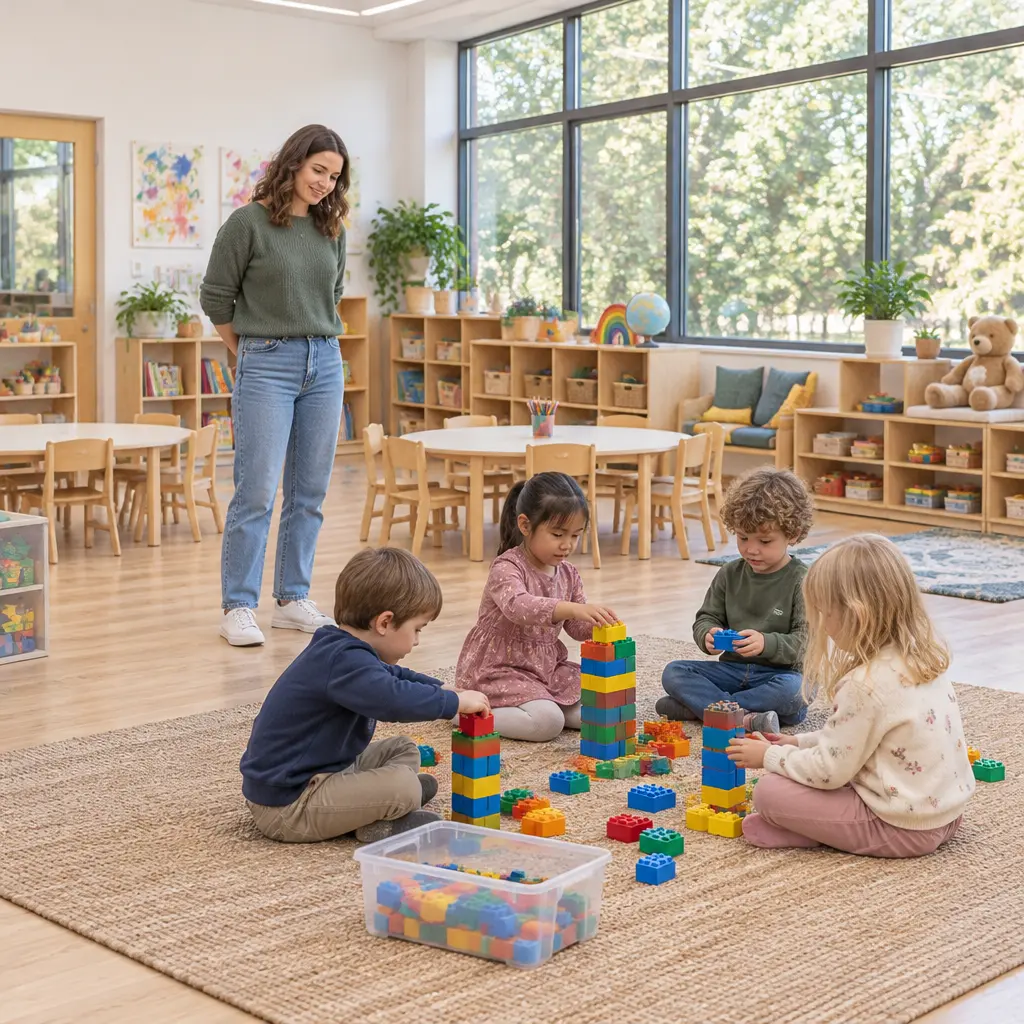
A high-quality child development program is a consistent, supportive setting that helps children build social, emotional, physical, language, and thinking skills through safe relationships and age-appropriate experiences. To evaluate one, look beyond appearances: assess caregiver-child interactions, health and safety practices, staff qualifications, curriculum, family partnerships, and evidence of progress. These factors matter because early experiences shape later learning and well-being; the U.S. Centers for Disease Control and Prevention (CDC) notes that about one in six U.S. children ages 3–17 has a developmental disability. A careful review can help families identify programs that respect each child’s needs and support healthy development.
How Quality Defines a Child Development Program
The National Institute of Child Health and Human Development (NICHD) describes child care quality through features such as caregiver-child interaction, staff training, group size, and the child-to-adult ratio. In practice, a high-quality child development program combines these structural conditions with warm, responsive relationships and purposeful learning experiences. No single rating, building feature, or curriculum label is enough to establish quality; families should look at how the program works day to day.
Quality has two connected dimensions. Structural quality includes observable conditions—such as group size, staffing, health procedures, and staff credentials. Process quality concerns what children experience: whether adults respond sensitively, guide play, support communication, and help children feel secure. Both matter, and state licensing is a baseline rather than a guarantee of excellence.
Responsive Relationships and Emotional Safety
Responsive care means adults notice children’s cues and respond promptly, warmly, and appropriately. Look for staff who get down to children’s eye level, speak respectfully, comfort upset children, and encourage children to express feelings and ideas. Consistent relationships are especially important for infants and toddlers, who rely on familiar caregivers to feel safe enough to explore.
The Harvard University Center on the Developing Child uses the term “serve and return” for the back-and-forth exchanges between a child and a responsive adult. These exchanges help build the foundations for communication and learning. During a visit, observe whether staff follow children’s interests and extend their play, rather than relying mainly on commands or screens.
Developmentally Appropriate Learning
A developmentally appropriate program offers activities suited to children’s ages, abilities, interests, and cultures. The National Association for the Education of Young Children (NAEYC) defines developmentally appropriate practice as a strengths-based, play-based approach to joyful, engaged learning. Children should have opportunities to explore, move, imagine, talk, create, and solve problems—not spend most of the day in passive instruction or repetitive worksheets.
A balanced day may include reading aloud, outdoor play, pretend play, music, hands-on materials, rest, and predictable routines. Activities should be adaptable: a caregiver might offer a simple sorting task to one child and a more complex pattern challenge to another. The aim is to encourage progress without pushing children into a one-size-fits-all schedule.
How Safety and Staffing Shape a Child Development Program
A thoughtful curriculum cannot compensate for unsafe conditions or inadequate supervision. Families should confirm that a program meets local licensing requirements and ask how it manages emergencies, illness, sanitation, food allergies, medication, and authorized pick-up. Because rules vary by jurisdiction and age group, compare the program’s actual practices with the requirements of the relevant state or local licensing agency.
Staff Qualifications, Stability, and Ratios
Qualified staff understand child development, guidance, health procedures, and ways to support different learning needs. Ask about education, background checks, first-aid and CPR training, ongoing professional development, and how new employees are supervised. Also ask how long teachers typically stay. High turnover can disrupt the stable relationships children need, even when a program’s written policies appear strong.
Ratios and group sizes affect how much attention each child can receive. The American Academy of Pediatrics has recommended, for example, a maximum ratio of 3:1 and a group size of six for infants under 12 months in center-based care. These are professional recommendations, not universal legal rules; requirements differ across states and age groups. Check current local standards and observe whether staffing remains adequate during breaks, arrival, outdoor play, and other transitions.
Health, Physical Safety, and Inclusive Practice
A safe environment is clean, well maintained, appropriately supervised, and designed for children’s developmental abilities. Look for secure entrances, safe sleep practices for infants, accessible handwashing, age-appropriate equipment, and clear procedures for injuries and emergencies. Staff should be able to explain how they prevent common hazards and communicate with families when a child becomes ill or is hurt.
Inclusion means adapting the environment and activities so children with disabilities, developmental differences, or varied communication needs can participate meaningfully. Ask how staff collaborate with families and specialists, provide accommodations, and respond to children’s cultural and linguistic backgrounds. The CDC’s estimate that roughly one in six children ages 3–17 has a developmental disability underscores why accessible, individualized support is relevant in ordinary early childhood settings—not only in specialized programs.
How Family Partnership and Progress Monitoring Strengthen a Child Development Program
High-quality programs treat families as partners and communicate about children’s routines, interests, strengths, and changing needs. This partnership connects learning at the program with the child’s home life and gives caregivers a fuller picture of development. The National Academies of Sciences, Engineering, and Medicine has emphasized that young children’s development is shaped by relationships and experiences across family and early-care settings.
Two-Way Communication and Family Engagement
Family engagement is an ongoing, two-way exchange—not just occasional announcements. A strong program explains how it shares updates, invites families’ observations, and handles concerns respectfully. Ask whether communication is available in a family’s preferred language and whether parents can discuss transitions, behavior, sleep, feeding, or developmental questions with staff.
Programs should also respect family knowledge and differences in culture, schedules, and caregiving practices while maintaining health and safety standards. A practical sign of partnership is that staff can describe a child’s interests and recent experiences, and can explain how family input has influenced the child’s care or activities.
Observation, Assessment, and Developmental Support
Progress monitoring uses ongoing observation and appropriate assessment to understand what children can do and what support may help them next. Staff should use findings to plan activities and share meaningful, specific examples with families—not to label children or compare them unfairly. Ask how often observations occur, what tools are used, how results are protected, and how families are involved in interpreting them.
If staff or families have concerns about development, a program should communicate them sensitively and help families identify appropriate next steps, such as speaking with a pediatrician or contacting an early intervention service. The CDC advises that developmental monitoring involves observing how a child grows and discussing concerns, while formal screening uses validated tools. A child development program can support this process, but it does not replace a qualified health professional’s evaluation.
How to Evaluate a Child Development Program in Practice
A tour, conversation with staff, and review of licensing or inspection information can reveal how written commitments translate into daily care. The U.S. Department of Health and Human Services’ Child Care and Development Fund supports state and territorial systems for child care assistance and quality improvement, but local rules, quality-rating systems, and available records differ. Use multiple sources of evidence rather than relying on one rating or a brief visit.
- Observe how adults speak with children, respond to distress, and support play.
- Ask for the daily schedule, staff qualifications, group sizes, and age-specific ratios.
- Review licensing status, inspection history, emergency procedures, and safe-sleep policies where relevant.
- Ask how the program supports inclusion, family communication, and developmental concerns.
- Visit during ordinary activity if possible, and notice whether children appear engaged and supervised.
- Compare fees, hours, location, food, and transportation with your family’s needs, while treating convenience as one factor rather than a proxy for quality.
For example, a family comparing two infant programs might find that both meet local licensing rules, but one has more consistent caregivers, smaller groups, clear safe-sleep procedures, and regular two-way updates. Those observable differences can help the family make a more informed choice, while still checking references and current inspection records.
Conclusion: Choose a Program That Supports the Whole Child
A high-quality child development program brings together responsive relationships, developmentally appropriate learning, safe conditions, qualified and stable staff, inclusive support, and meaningful family partnership. Ratios, credentials, and licensing provide useful evidence, but families should also observe how children are treated and what they experience throughout the day. Since early development is shaped by everyday interactions and environments, choosing carefully has implications for children’s learning, health, and sense of belonging. Visit programs, ask specific questions, review local licensing information, and discuss developmental concerns with a pediatrician or early intervention professional when needed.
Sources: National Institute of Child Health and Human Development, The NICHD Study of Early Child Care and Youth Development: Findings for Children up to Age 4½ Years, https://www.nichd.nih.gov/publications/pubs/documents/seccyd_06.pdf; National Association for the Education of Young Children, Developmentally Appropriate Practice, https://www.naeyc.org/resources/position-statements/dap/contents; Harvard University Center on the Developing Child, Serve and Return, https://developingchild.harvard.edu/science/key-concepts/serve-and-return/; American Academy of Pediatrics, Caring for Our Children: National Health and Safety Performance Standards, https://nrckids.org/CFOC; Centers for Disease Control and Prevention, Developmental Disabilities, https://www.cdc.gov/child-development/about/developmental-disabilities.html; National Academies of Sciences, Engineering, and Medicine, Transforming the Workforce for Children Birth Through Age 8: A Unifying Foundation, https://nap.nationalacademies.org/catalog/19401/transforming-the-workforce-for-children-birth-through-age-8-a; Centers for Disease Control and Prevention, Developmental Monitoring and Screening, https://www.cdc.gov/act-early/about/developmental-monitoring-and-screening.html; U.S. Department of Health and Human Services, Child Care and Development Fund, https://www.acf.hhs.gov/occ/programs/child-care-and-development-fund