
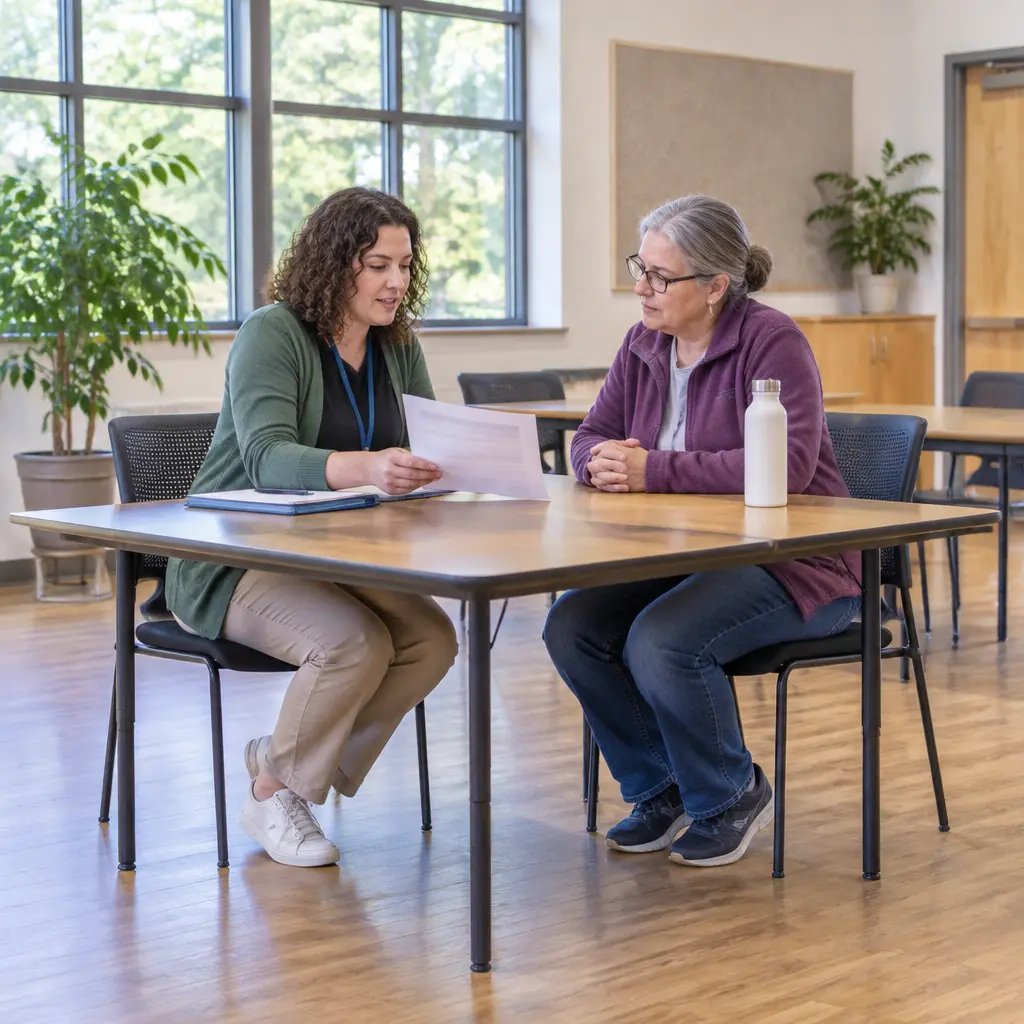
A family support program is a service or coordinated set of services intended to help families meet practical, emotional, developmental, or caregiving needs. The right choice depends on what the family needs, who is eligible, how services are delivered, and whether support is safe, accessible, and effective. Asking about program goals, staff qualifications, costs, privacy, cultural fit, and outcomes can help families compare options. These questions matter: the U.S. Department of Health and Human Services’ National Survey of Children’s Health has documented that many children and caregivers face unmet health and support needs, while the CDC reports that about one in six U.S. children aged 3–17 had a developmental disability during 2009–2017. A careful conversation can help families find services that fit their circumstances rather than settling for a program that is merely available.
Assessing Family Support Program Goals and Fit
A family support program is best understood by its intended outcomes, target population, and service model. The National Association for Family, School, and Community Engagement describes family engagement as a shared responsibility in which families and professionals work together to support children’s learning and development. In practice, programs may provide parenting education, home visiting, early intervention, respite care, counseling, peer support, or help navigating benefits. These are related types of support, but they do not all serve the same needs or use the same methods.
What needs does the program address?
Ask the provider to explain the needs the program is designed to address and how it decides whether a family is a good fit. A program might focus on infant and toddler development, caregiver mental health, disability-related services, food or housing referrals, or family relationships. Request examples of goals families commonly set, and clarify whether the service is preventive, short-term, ongoing, or crisis-oriented. The CDC’s estimate that roughly one in six children has a developmental disability illustrates why families may need very different forms of support; a general parenting class, for example, may not substitute for an evaluation or specialized intervention.
What services are included—and what is outside the program’s scope?
Ask what happens during a typical appointment, how often families meet, and whether services include referrals or follow-up. Also ask what the program cannot provide. A home-visiting service may offer coaching and connections to community resources but not clinical treatment; a peer group may provide social support but not case management. Clear boundaries help families avoid delays in getting specialized care and make it easier to coordinate with schools, clinicians, or other agencies.
How will the program and family define progress?
Ask how goals are set, how progress is reviewed, and whether families can revise goals when circumstances change. Useful measures may include attendance, caregiver confidence, access to needed services, developmental screening follow-up, or progress toward a family-selected objective. Request an explanation of how outcomes are measured and whether results are reported for the whole program or discussed privately with each family. A credible provider should be able to describe its approach without promising guaranteed results.
Checking Family Support Program Quality and Safety
Once a program appears relevant, families can examine who delivers the services, how safety is handled, and what evidence supports the approach. Quality is not established by a program’s name alone: it depends on competent staff, clear procedures, respectful relationships, and appropriate oversight. The U.S. Department of Health and Human Services’ Home Visiting Evidence of Effectiveness review, for example, evaluates research on home-visiting models rather than treating every program with a similar label as equally supported.
What qualifications and supervision do staff have?
Ask about staff education, relevant licenses or certifications, experience with the population served, background checks, and ongoing supervision. Requirements vary by service and location, so families should distinguish between licensed clinical care and nonclinical support. If staff provide therapy, medical advice, or developmental assessment, ask who is responsible for that work and how to verify their credentials. For peer-support programs, ask what training and boundaries guide peer workers.
How does the program protect children and family members?
Ask about screening and reporting procedures, staff conduct policies, emergency response, home-visit protocols, and how families can raise a concern. Find out whether the program has a written complaint process and who reviews complaints. For services involving children, ask how the provider follows applicable safeguarding and mandatory-reporting requirements. Families should be able to understand these procedures before sharing sensitive information or participating in home-based services.
What evidence supports the program’s approach?
Ask whether the program follows a defined model, uses research-informed practices, or has been evaluated locally. Evidence may include peer-reviewed studies, independent evaluations, participant feedback, and routine outcome data. The federal Home Visiting Evidence of Effectiveness review is one example of a resource that assesses evidence for eligible home-visiting models. Evidence does not guarantee a particular family’s outcome, but it can help distinguish a tested approach from unsupported claims.
Reviewing Access, Costs, and Practical Fit
Even a well-designed program may not work for a family if it is too costly, difficult to reach, or incompatible with work and caregiving schedules. The National Survey of Children’s Health, administered by the U.S. Census Bureau for the Health Resources and Services Administration, tracks children’s health, family circumstances, and access to care—factors that shape whether support is reachable in real life. Ask about the entire participation process, not only the advertised service.
Who is eligible, and how long is the wait?
Ask about age limits, service-area rules, referral or diagnosis requirements, income criteria, documentation, and enrollment capacity. Find out whether there is a waitlist, how long families typically wait, and whether the program can offer interim referrals. If a family is not eligible, ask the provider to identify alternatives rather than ending the conversation at a rejection.
What will the family pay?
Ask whether services are free, covered by insurance or public funding, offered on a sliding scale, or subject to fees for assessments, materials, travel, or missed appointments. Request a written explanation of charges and ask whether financial assistance is available. Families should also clarify whether choosing one service affects eligibility for another benefit. Do not assume that “community program” means no cost.
Are schedules, locations, and formats workable?
Ask whether appointments are available outside work or school hours, whether sessions can be held at home or remotely, and what accommodations are available for disability, language, transportation, or childcare needs. Remote services may improve access for some families, but they can be a poor fit where privacy, reliable internet, or hands-on support is essential. A practical program should discuss barriers and possible adjustments openly.
Evaluating Family Support Program Respect, Privacy, and Partnership
Support is more likely to be useful when families are treated as partners with expertise about their own lives. The National Academies of Sciences, Engineering, and Medicine has emphasized the importance of family-centered approaches in services for children and families. Families can assess this partnership by asking how decisions are made, how information is protected, and whether the program can respond respectfully to cultural and individual differences.
How are families involved in decisions?
Ask whether the family helps choose goals, can decline a service, and can request a different staff member or communication method. Find out how the program handles disagreement and whether families receive copies of plans or progress notes. A collaborative approach should explain options and trade-offs rather than pressure families into a single path.
How is personal information collected and shared?
Ask what information is recorded, who can access it, how long records are kept, and when information may be shared with schools, clinicians, or partner agencies. Request the privacy notice and consent forms before signing. Confidentiality rules differ across service types and laws, so ask the provider to explain exceptions, such as safety-related reporting obligations, in plain language.
Can the program meet language, cultural, and accessibility needs?
Ask whether interpretation and translated materials are available, whether staff understand the community served, and how accommodations are arranged. Families can also ask how the program responds to religious practices, family structures, disability, and differing views of caregiving. The U.S. Department of Health and Human Services’ National Standards for Culturally and Linguistically Appropriate Services provide a framework for respectful, responsive care. A provider should explain how it puts those principles into practice, not rely only on broad claims of inclusiveness.
Comparing Options and Making a Decision
A short comparison process can turn answers into a decision. Families may speak with more than one provider, request program materials, and ask a trusted clinician, school professional, or community organization for a referral. For example, a caregiver seeking support for a toddler with developmental concerns might compare an early-intervention referral, a home-visiting service, and a parent peer group. These options can complement one another, but they differ in eligibility, clinical scope, and intensity.
Use a consistent set of questions
Using the same questions for each provider makes comparisons fairer. Record the answers, note what remains unclear, and ask for written details about cost, schedules, and privacy. Families can prioritize essential criteria—such as language access or specialized expertise—over preferences that are less important.
- What needs does the program serve, and what services are included?
- Who is eligible, what is the wait time, and what does participation cost?
- What qualifications, supervision, and safety policies apply to staff?
- How are goals and progress decided with the family?
- How does the program protect privacy and accommodate language or disability needs?
- What happens if the program is not a good fit or the family needs more specialized help?
Plan for follow-up and changing needs
Before enrolling, ask when the family will review whether the service is helping and how to pause, change, or end participation. Needs can shift with a child’s development, a move, a new diagnosis, or a change in family circumstances. A clear follow-up plan helps families continue, adjust, or transition to another service without losing important support.
Conclusion: Choosing a Family Support Program With Confidence
Choosing a family support program means assessing fit, quality, practical access, and the quality of the partnership—not simply accepting the first available option. Ask what the program does, who delivers it, what evidence supports its approach, what it costs, how it protects privacy, and how families shape decisions. Then compare answers against the family’s most important needs and revisit the choice as circumstances change. Families can begin by contacting local health departments, early-intervention agencies, schools, or community organizations and requesting clear written information before enrolling.
Sources: Centers for Disease Control and Prevention, “Prevalence and Characteristics of Autism Spectrum Disorder Among Children Aged 8 Years,” https://www.cdc.gov/mmwr/volumes/69/ss/ss6904a1.htm; U.S. Department of Health and Human Services, Home Visiting Evidence of Effectiveness, https://homvee.acf.hhs.gov/; U.S. Census Bureau and Health Resources and Services Administration, National Survey of Children’s Health, https://www.census.gov/programs-surveys/nsch.html; National Association for Family, School, and Community Engagement, Family Engagement Core Competencies, https://nafsce.org/page/Competencies; National Academies of Sciences, Engineering, and Medicine, Parenting Matters: Supporting Parents of Children Ages 0–8, https://nap.nationalacademies.org/catalog/21868/parenting-matters-supporting-parents-of-children-ages-0-8; U.S. Department of Health and Human Services, National Standards for Culturally and Linguistically Appropriate Services in Health and Health Care, https://thinkculturalhealth.hhs.gov/clas.